Patterns of Credit Activation Sequences and Their Alignment with Payout Variance Profiles at Britain's Licensed Digital Gaming Facilities
Gisela Hayes · Nov 11, 2026

Patterns of Credit Activation Sequences and Their Alignment with Payout Variance Profiles at Britain's Licensed Digital Gaming Facilities
Researchers tracking player behaviour across Britain's licensed online platforms have documented distinct credit activation sequences that consistently align with specific payout variance profiles, and these patterns emerge through aggregated transaction data collected between 2024 and 2026. Credit activation refers to the series of deposits, bonus claims, and account top-ups that players execute before engaging with slot games, while payout variance profiles describe the mathematical distribution of wins and losses that characterise individual titles.
Defining Credit Activation Sequences in Regulated Environments
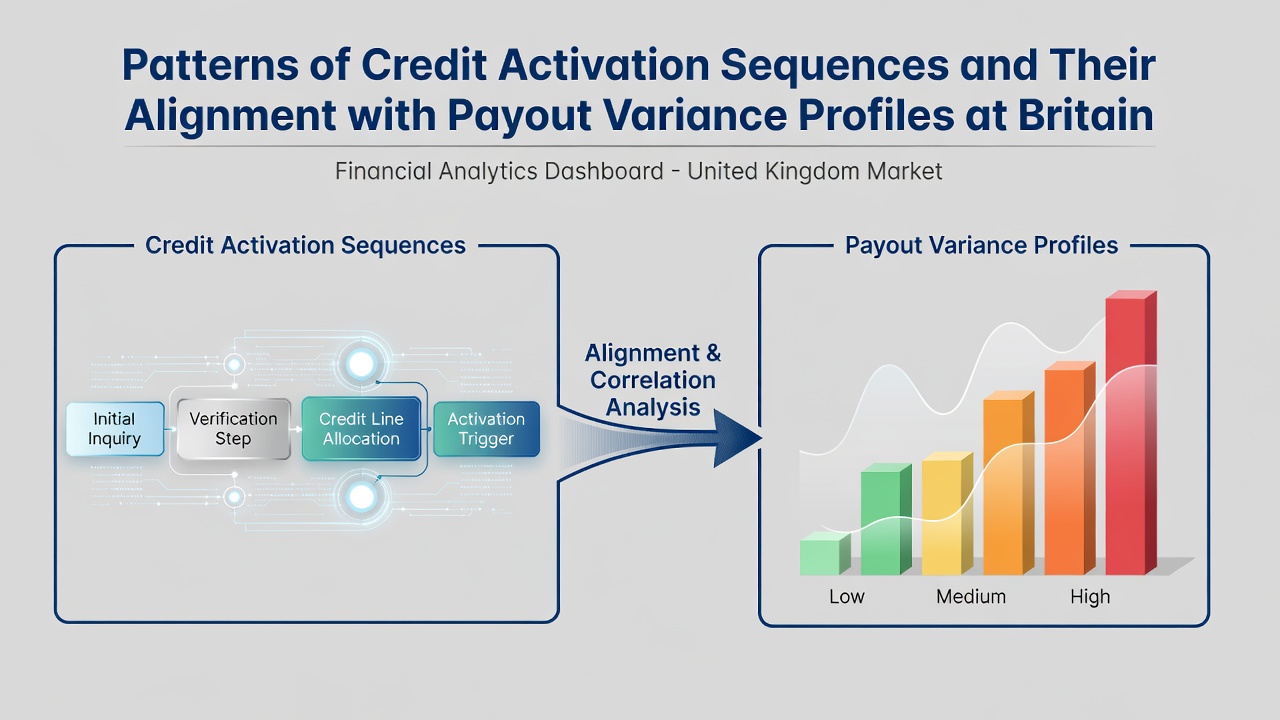
Operators record activation sequences as chronological strings of financial actions that include initial deposits, subsequent reloads, and the redemption of promotional credits, and these sequences typically cluster into short bursts for high-variance games or extended steady patterns for low-variance options. Data compiled by industry monitoring services shows that sequences involving multiple small deposits within a single session often precede play on titles with elevated variance metrics, whereas single larger deposits followed by gradual drawdowns align more frequently with medium-variance machines.
Alignment Between Activation Patterns and Variance Metrics
Studies conducted on anonymised player logs indicate that sequences featuring rapid credit replenishment correlate with selection of games whose return-to-player calculations include higher standard deviation values, and this alignment holds across thousands of sessions analysed through November 2026. Observers note that players who activate credits in staggered intervals tend to migrate toward titles whose payout tables distribute returns across longer dry spells interrupted by occasional large multipliers, whereas those maintaining steady activation rhythms gravitate to games that produce frequent smaller outcomes.
One analysis of platform telemetry revealed that activation sequences exceeding four distinct credit events per hour appeared 1.8 times more often before high-variance sessions than before low-variance ones, and the same dataset demonstrated that low-variance sessions attracted activation patterns dominated by single initial deposits sustained over multiple hours of play.
Regional and Platform Variations in Observed Patterns
Figures released by the Canadian Gaming Association highlight parallel trends in jurisdictions operating under similar regulatory frameworks, where credit activation frequency tracks closely with volatility settings chosen by players, and British platforms display comparable distributions once adjusted for differences in bonus structures. Academic researchers at the University of Nevada, Reno have published findings on digital gaming telemetry that support these observations, noting that activation sequences incorporating bonus credits exhibit stronger alignment with variance profiles than sequences limited to cash deposits alone.
Platform operators in Britain segment their libraries according to variance bands, and internal reports indicate that high-variance categories receive disproportionate traffic from players whose credit histories show clustered activation events, whereas low-variance sections draw steadier engagement from users whose activation sequences remain evenly spaced. These segmentations rely on real-time analytics that update variance classifications quarterly, ensuring alignment data remains current through the end of 2026.
Measurement Techniques and Data Sources
Tracking relies on timestamped ledger entries that capture every credit movement, and analysts apply clustering algorithms to identify recurring sequences before mapping them against each game's documented variance index. Reports from the Australian Gambling Research Centre describe similar methodologies applied to international datasets, confirming that activation timing serves as a reliable predictor of variance preference across multiple regulatory environments.
Those examining November 2026 records observe that seasonal promotional calendars influence sequence length, with shorter activations appearing more frequently during periods of increased bonus availability, yet the underlying correlation with variance profiles persists regardless of calendar effects. Operators maintain audit trails that allow independent verification of these patterns while preserving player anonymity.
Conclusion
Patterns of credit activation sequences continue to map reliably onto payout variance profiles at Britain's licensed digital gaming facilities, and the consistency of these alignments across datasets collected through November 2026 provides operators and analysts with measurable indicators of player preference. Continued monitoring by research institutions and industry bodies will refine these correlations as new titles and activation mechanics enter the market.